
How Safe Are Imaging Tests Like MRI, CT, X‑ray, and Ultrasound?
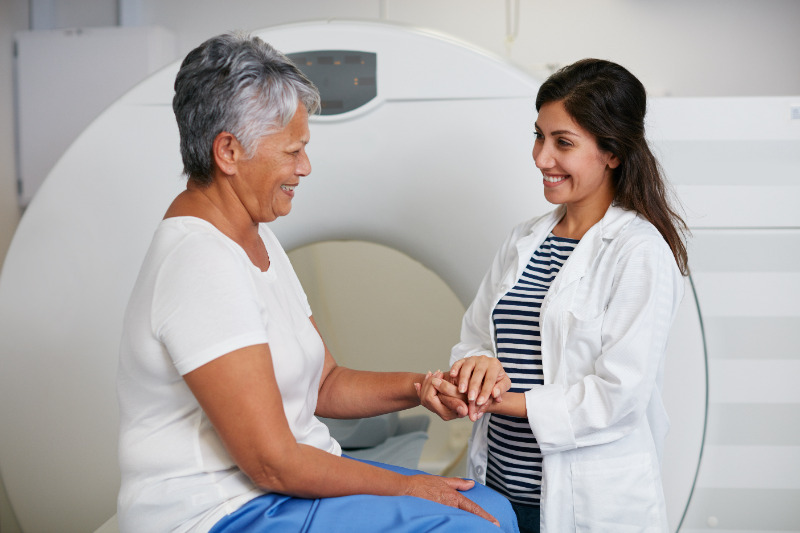
Whether as part of your diagnosis, treatment, or routine checkups, depending on your condition, your physician may request multiple imaging tests on a semi-regular basis. After some time, you may begin to wonder about the safety of these tests. If you have needed to undergo recent MRI, CT, X-ray, or ultrasound imaging tests, here’s what you need to know about their safety.
What Are Imaging Diagnostics?
Imaging diagnostics are often the first step needed for your physician to build a clear picture of what is going on inside your body. These tests are non-invasive ways to diagnose a wide range of conditions, and can give doctors a reason to delve deeper or try a new approach. Imaging tests are invaluable to modern medical professionals and can help in the early detection of serious conditions. They also reduce the need for invasive procedures, help to guide treatment decisions, and are invaluable in ongoing disease monitoring. These tests use various techniques to capture images of the internal structures in your body: organs, tissues, and bones. They can also be used to identify foreign bodies, tumors, infections, and more.
Common Types Of Imaging Diagnostics
At Advantage Diagnostics, we offer four main imaging diagnostics services:
X-Ray
X-rays use small amounts of electromagnetic radiation that pass through the body. Tissues and bones absorb these X-rays at different rates and amounts, and some make it through to the other side. This process creates images, similar to a film negative, that accurately portray the internal structure of the body.
CT (Computed Tomography) Scan
A CT scan also utilizes X-rays, but it operates on more planes than a typical X-ray. CT scan equipment rotates around the patient’s body and captures multiple cross-sectional images. The final result is a more comprehensive image, resulting in a fully 3D cross-sectional view of a patient’s internal tissues and bones.
MRI (Magnetic Resonance Imaging)
MRI scans utilize strong magnetic fields and radio waves to affect the protons in water found inside a patient’s body. The subsequent reaction can be tracked and the changes are recorded and transferred into a visual representation of the internal structures of a patient’s body.
Ultrasound
Ultrasounds use high-frequency sound waves sent through a patient’s body. These sound waves and the returning echoes produced create real-time imagery of what is going on inside the body. These images can then be captured and stored for reference.
Are Imaging Diagnostics Safe?
All patients must realize that every medical test or procedure can have risks, whether general to all patients or specific to an individual. That said, these four routine imaging diagnostics tests are considered to be very safe and well-tolerated by a wide range of patients.
The most concern arises surrounding X-ray and CT tests, since some radiation is involved. For those who require an occasional X-ray or CT scan, this is not a big concern. However, for those who require regular testing to screen for conditions–like lung cancer, for example–there may be a low-dose radiation option available as a safer alternative. The risk for cancer or other negative health outcomes as a result of radiation exposure for a fraction of a second during testing is slight when having an X-ray or CT scan done. In fact, many individuals do not realize that in their everyday lives, they are routinely exposed to low levels of radiation. Other concerns could focus on contrast agents like barium and iodine–there are specific allergies and health conditions that your doctor will need to be made aware of prior to approving a procedure. To ensure patient safety, we always require blood work prior to administering any contrast agents. In general, however, for the majority of patients, the benefits of having the test done outweigh the risk.
Ultrasounds and MRIs are considered to be very safe for most populations. The most serious concern is that some individuals who have metal implants, medical devices, or embedded metal fragments may not be best suited for an MRI. Check our article on how to prepare for an MRI to know if this impacts you. There is no radiation involved, and the sound waves and magnetic fields used are safe and non-invasive. Other risks that a patient may face, beyond concerns over embedded metal, could be distress over the noises associated with the test, difficulty in lying still for extended periods of time, or a negative reaction to the confined space of the equipment. At Advantage Diagnostics, we are proud to offer open MRIs for a lower-stress and more comfortable test experience.
All of these imaging diagnostics tests are typically painless and require little to no recovery time. Patients can have the testing done and go about their day.
Safe and Trusted Testing From Advantage Diagnostics
Every medical procedure or treatment has its risks–that’s a given. But whether the risk has serious consequences is a different matter. The medical community, and our skilled and experienced doctors, would never advocate for practices or techniques that are not safe. You can trust that the imaging diagnostics tests available at Advantage Diagnostics are worth the minor risk, as they can help your physician to diagnose and treat potentially serious conditions. That said, it is your right as a patient to discuss your options with your doctor and agree on testing and treatments that feel right for you. If you are concerned about any of the above-explained tests, please contact your prescribing physician, and feel free to ask us about potential risks.
If you are a patient in the Cleveland or Beachwood, Ohio area and your doctor has prescribed imaging diagnostics testing as part of your healthcare and condition assessment, Advantage Diagnostics is here to help. We are proud to offer professional imaging services along with a team of expert radiologists who can quickly and accurately interpret your test results. Contact us today to request or submit a patient referral form, and to learn more about our suite of diagnostic imaging services.